TAMESHIGIRI
Tameshigiri is the test cut of a Nihon-tō – the Japanese sword better known as the katana.
Nowadays this test is performed on a rolled straw mat soaked in water, or on bamboo, or a bundle of bamboo tied together. In medieval Japan, the necessary cutting tests used to assess blades were often also performed using corpses as test targets, or, for those who could afford it, on prisoners or condemned criminals: the tameshimono – literally, “cutting objects.”
Tameshigiri is demanding and useful for anyone who practices kenjutsu or battō-dō, but it must always be practiced with extreme care. There are several potential risks associated with it, and for this reason the test must always be supervised by someone familiar with its execution.
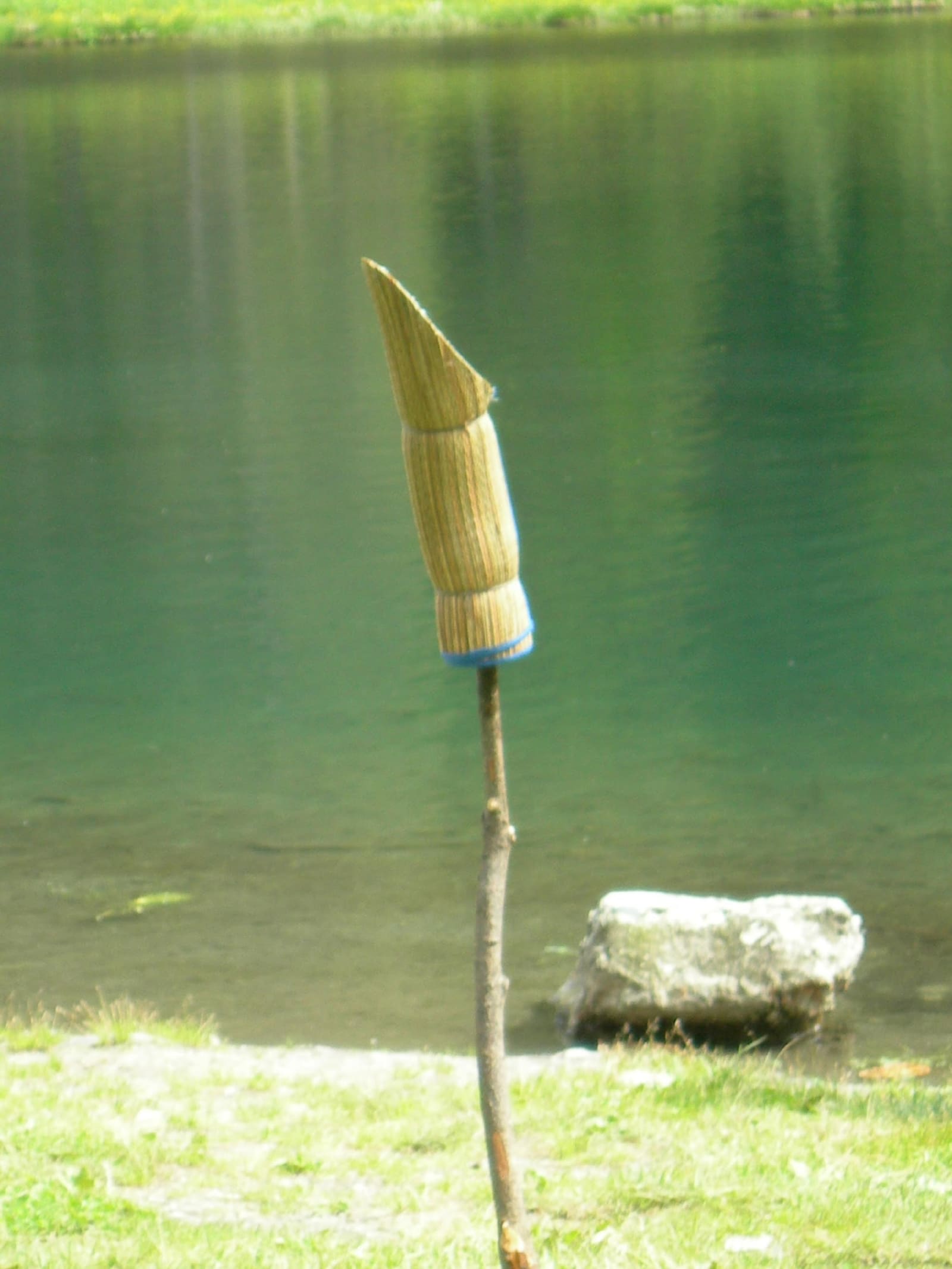
The mats should be soaked in water several hours before cutting – ideally for more than twelve hours – then tightly rolled and tied with string. Afterwards, to remove excess water, it is enough to let them drain for a few hours. An incorrect soaking procedure may leave them too rigid for the test, invalidating the result and even exposing the practitioner to potential accidents.
A properly prepared tatami-maki simulates the shape and resistance of a human limb. The stand that supports it, whatever type it may be, must be solid and have a stable base. The soaked tatami roll is then firmly fixed to the stand and is ready for the test.
Before performing tameshigiri, it is necessary to evaluate whether the sword is suitable. If an old blade of unknown history is used, it should first be checked by an expert capable of assessing its condition. If a bend, crack, or any other damage is found in the metal, the blade should undergo a further, very careful examination to identify any additional factors that might compromise the structural integrity of the sword. For this reason, tameshigiri must never be performed with a sword that has not first been checked and assessed by a sufficiently experienced person.
Before the test, in addition to inspecting the structure of the blade, it is also necessary to check the edge. If the blade appears unable to cut properly, it must be sharpened accordingly. Before cutting, the mekugi – the small pegs that secure the tsuka to the nakago (the tang of the blade) – must also be checked for breaks or cracks, and to make sure they are firmly fixed. If the mekugi come out easily or show signs of damage, they must be replaced beforehand and checked again after each cutting test.
Tameshigiri should preferably be performed outdoors, on a surface free of obstacles. If this is not possible, it may be performed inside the Dojo, but with particular attention to reishiki (etiquette) and with the greatest effort to preserve the purity of the Dojo environment itself. Tameshigiri is, in fact, the simulation of killing another human being, and this should generate a potential sense of spiritual bitterness.
Participants must be reminded to take part in the practice with the utmost seriousness, adopting extreme care and all necessary precautions. Before performing the exercise, attention must be focused on the type of cut to be executed, which must be completed with zanshin – literally, “leaving the spirit behind” (kokoro no wokosu). This term is often translated in a limited and reductive way simply as “vigilance,” but its meaning goes beyond that. The state of awareness represented by good zanshin after an action is almost tangible and leaves something indefinable in the air. One could say that it is a still, retrospective contemplation of the action just performed. More generally, and without relying on its literal meaning, this concept may be defined as the state of awareness and vigilance with which all combative techniques must be carried out. It must be maintained fully throughout the techniques, without weakening or wavering, until the final bow. In the case of a sequence of kata, it must be continuously present throughout the entire series of movements.
A correctly performed tameshigiri is effectively a kata and must therefore be executed as such, giving greater attention to form and precision than to approximate and imprecise power, and with the necessary mental discipline, focus of intention, and attention. If these elements are absent, one is not practicing budō, but rather allowing oneself to be seduced by the improper desire to gratify the ego and self-exaltation. A correctly executed cut requires minimal force. Excessive force often causes an incorrect hasuji (blade angle) and makes the cut fail. Excessive force and improper hasuji also place extreme stress on the sword, which may in turn cause damage to the blade or other accidents. In short, strength must never be used as a substitute for correct cutting technique.
One must avoid transforming tameshigiri from a necessary form of martial education into a corrupted form of symbolic butchery.
Tameshigiri should be performed rarely and solely for the purpose of reinforcing the correct execution of cutting techniques. Overemphasizing this practice may create the risk that practitioners begin to see the exercise as a kind of game. This mental attitude must be absolutely avoided, because it distorts the solemn nature of the practice.