Wabi – Sabi – Yugen
Within Budo, these three aesthetic principles express the ideal representation of how a martial technique should be characterized.
Wabi-sabi (in Kanji: 侘 寂) constitutes an aesthetic vision of the Japanese world, sometimes described as the beauty of what is imperfect, impermanent, and incomplete.
The expression is composed of the two words Wabi and Sabi, which are the most evident and distinctive features of what we consider traditional Japanese beauty. It occupies, in Japanese culture, roughly the same place that the ideals of beauty and perfection held in Ancient Greece for the West.
The words Wabi and Sabi are not easy to translate. Wabi originally referred to the solitude of life in nature, far from society; Sabi meant “cold,” “poor,” or “withered.” Around the 14th century, however, these meanings began to change, taking on more positive connotations.
Wabi: today identifies simplicity, freshness, or silence. It can be applied both to natural and artificial objects, and also to understated elegance. It can also refer to irregularities or flaws generated during the process of creation, which add uniqueness and elegance to the object.
Sabi: is genuine beauty, the elegance of rustic naturalness, or the serenity that accompanies the passage of age, when the life of objects and their impermanence are revealed by the patina and wear of time, or by visible repairs; the richness of what has been set aside and the charm of things worn and weathered by time.
A clearly understandable model can be represented, for example, by observing a mountain cabin from a constructive and architectural point of view:

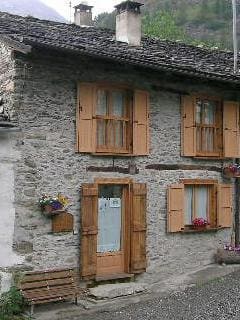

it is Wabi – simple – because its structure has no “baroque” excesses; beams and stones compose its primary structure, essential and sober in its architectural aspects, yet efficient and solid.
it is Sabi – natural – because the wood of the beams, for example, will be cracked by time, perhaps marked by termite damage; the stones will be irregular and may be cracked and worn by the action of the weather; those facing north may perhaps be covered by a light patina of moss.
Associating and comparing the descriptions and examples given above with a martial technique, it should therefore be observed as:
Wabi – in that it is seen to be performed with simplicity (not to be confused with ease), in accordance with the natural laws of physics and of the human body;
Sabi – in that one notices in its execution a naturalness, authenticity, and ease derived from long practice and experience.
Yugen: maturity, fullness, tranquility, and elegance of a result achieved serenely.
According to the poet Teika (or Fujiwara Sadaie, 1162–1241), his interpretation of Yugen includes ideas such as “suggestiveness,” “enchantment,” and “dynamic stillness,” expressing the heart and soul of the human being.
Its essence lies in beauty and courtesy, in the tranquility and elegance of a result achieved serenely; Yugen can be understood by the mind but not expressed in words, because its essence is found in that inexpressible “something” which can nevertheless be perceived as denoting the highest realm of artistic expression.
As a concept applied to classical Budo, Yugen refers to the abilities that a student acquires through direct experience after penetrating the depths of the martial discipline from both a technical and spiritual point of view, while at the same time undergoing an inner transformation.
Yugen is evident in the technique of a Master who has reached high martial and spiritual levels, and who is able to express this in his technique through the interplay of action and non-action, since this reveals the strength of the Master himself; it can therefore be said that Yugen is connected with the [power of expression]{.underline}.
The martial representation of the three concepts considered can also be highlighted through the “symbolic levels” that identify the three series forming the Muso Shinden Ryu school of Iaido:
-
the first series, Omori, symbolized by the term Kan – i, meaning “simplicity” (again, not to be confused with the idea of “ease”);
-
the second series, Hasegawa, symbolized by the term Yu – Ga, meaning “elegance”;
-
the third series, Okuden, symbolized by the term Ken – Ryoku, meaning “power” (Ryo: power – Ku: 10,000, identifying in Japanese culture the sense of infinity; therefore “infinite power”).
By associating the symbols described above, we can easily identify the correspondences:
Wabi 🡨🡪 Kan – i
Sabi 🡨🡪 Yu – Ga
Yugen 🡨🡪 Ken – Ryoku